
1979 Corvette Road Test: Record Sales, Falling Performance
 When Corvette Became a Lifestyle Car (Not Just a Sports Car)
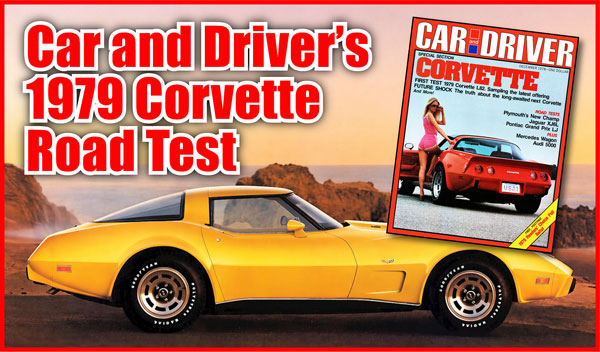
Car and Driver shows America that “Gentlemen prefer blondes with red Corvettes.”
Download the free PDF version of the Car and Driver 1979 Corvette road test today.
By the end of the 1979 Corvette production run, no one saw this coming. 1970s inflation pushed Corvette prices from $5,192 in 1970 to $10,220 by 1979. Yet sales climbed from 17,316 in 1970—arguably the peak of the performance Corvette era—to 49,213 in 1977, and then to a record 53,807 in 1979. The conventional story says 1970s Detroit performance died a quick death. And in many ways, it did.
By 1970, every carmaker offered some level of performance or muscle car
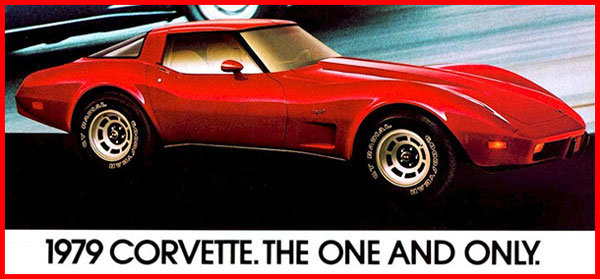
Most lineups had a full range of mild-to-wild options. By 1972, however, “performance” had become a dirty word. The remaining muscle cars were de-fanged versions of their former selves. Suddenly, small cars were everywhere—Vegas, Pintos, Rabbits, Civics, Corollas. Meanwhile, true muscle cars could be had for pennies on the dollar—if you had the cash.
So by 1979, Corvette marketing wasn’t just selling speed—it was selling image.
1978-1982 Corvette Performance: 0-60, Quarter Mile, and Top Speed
| Model Year | 0-60 mph | 1/4 Mile | Top Speed | Notes |
|---|---|---|---|---|
| 1978 | 6.5–7.8 sec | 15.2–15.7 sec | 123–132 mph | Anniversary year. L82 cars still delivered solid performance. |
| 1979 | 6.4–7.5 sec | 15.3–15.7 sec | 125–134 mph | Record sales. Performance essentially unchanged. |
| 1980 | 7.6 sec | 15.9 sec @ 88 mph | 123 mph | Clear drop. Emissions tuning hit performance hard. |
| 1981 | 7.9–8.1 sec | ~16.0 sec | 120–125 mph | Performance slid further. Focus shifted to comfort. |
| 1982 | 8.1 sec | 15.9 sec @ 86 mph | 125 mph | Cross-Fire year. Improved drivability, not speed. |
Road test data from 1978 to 1982 shows how late C3 Corvette performance slowly declined, even as sales remained strong and Chevrolet repositioned the car toward comfort, image, and convenience. In just four years, 0–60 times slipped by nearly 2 seconds—while sales hit record highs.
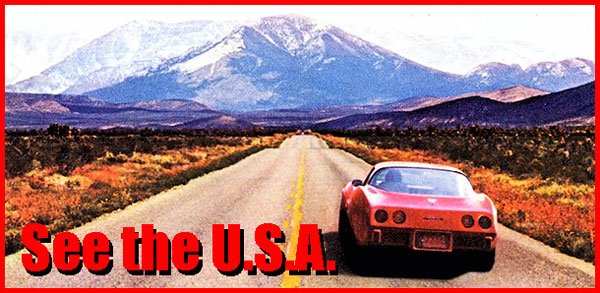
Over the years, Car and Driver maintained a love-hate relationship with the Corvette
They loved the raw, high-performance versions, but they always found something to complain about. That’s why it was surprising to see them visually lean into the cultural shift. The test car was Corvette Red, and the long-haired blondie was cute as can be, and having a great time! Their headlines started emphasizing lifestyle over lap times.

Corvette Generational History
The 1968–1982 C3 Corvette Review: Engineering, Styling, Sales, and Legacy Story is now available.
But as buyers loaded up on automatics, power options, and comfort features, Chevrolet quietly detuned performance. It wasn’t that engineers like Dave McLellan and Gib Hufstader changed their philosophy—they didn’t have a choice. Regulations forced their hand.
The result? A Corvette that still looked fast—but increasingly favored cruising over carving corners. Corvette wasn’t getting faster—it was getting easier to live with. And buyers couldn’t get enough of it.
| Category | Corvette | Camaro Z28 | Firebird Trans Am |
|---|---|---|---|
| Base MSRP (1979) | $10,220 | ~$6,500 | $6,883 |
| Fully Optioned Price (1979) | ~$14,500 | ~$9,000 | ~$10,000 |
| Price in 2026 Dollars* | ~$63,000 | ~$39,000 | ~$43,000 |
| Horsepower (net) | 195–225 hp (L48/L82) | 175–185 hp | 185–220 hp |
| Price per Horsepower | ~$64–$74 / hp | ~$48–$51 / hp | ~$45–$54 / hp |
| Production / Sales | 53,807 | 84,877 (Z28 only) | 116,535 (Trans Am only) |
| Market Position | Premium sports car | Performance value coupe | Style + performance leader |
In 1979, buyers could purchase a fully loaded Z28 or Trans Am for thousands less than a Corvette—and get similar or better real-world performance. Yet Corvette remained the aspirational car. By the late C3 era, image mattered just as much as speed.
And if you like ironic factoids, here are a few to chew on
The 1979 Corvette became the best-selling Corvette ever, with 53,807 units sold. Yet it offered no distinctive features, and no special editions like the 1978 25th Anniversary or Pace Car Replica.
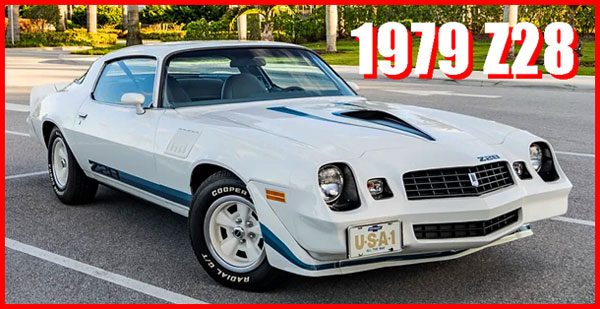
Photo: https://bringatrailer.com
Based on Bring a Trailer sales from April 2025 to April 2026, mid-range prices for 1979 Corvettes fall between $11,500 and $18,000. That’s nearly identical to the 1979 Z28’s $10,000 to $17,500 range—even though Chevrolet built 84,877 Z28s.
| Category | Corvette | Camaro Z28 | Firebird Trans Am |
|---|---|---|---|
| Low Sale Price | ~$10,000 | ~$3,800 (project) | ~$22,000 |
| Mid-Range Sales | $11,500–$18,000 | $10,000–$17,500 | $25,000–$40,000 |
| High Sale Price | ~$18,000 | ~$32,500 (modified) | $88,000–$265,000 |
| Typical Condition (Low) | Driver-quality, repaint, mechanical needs | Projects or worn drivers | Higher-mile drivers, cosmetic wear |
| Typical Condition (Mid) | Clean drivers, partial restoration | Solid survivors, mild mods | Nice originals, restored examples |
| Typical Condition (High) | Low-mile L82 cars, very clean originals | Restored or heavily modified builds | Ultra-low-mile, Special Edition, survivor cars |
| Market Trend | Flat to slightly rising | Wide spread based on condition | Strong upward, collector-driven |
Then there’s the 1979 Trans Am
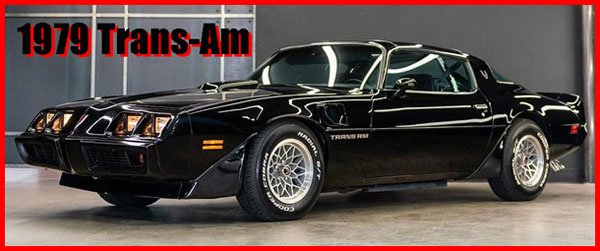
Photo: https://bringatrailer.com
Mid-range Bring a Trailer sales over the same period land between $25,000 and $40,000. And here’s the real kicker: Pontiac sold 116,535 1979 Trans Ams, about 216% more than Corvette production. The base Trans Am costs around $6,900, while the Corvette starts at $10,220. That price gap didn’t hurt sales—it helped drive them.
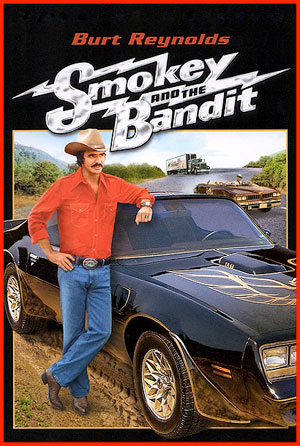 But what really supercharged the Trans Am was the massive success of the 1977 movie, Smokey and the Bandit. Pontiac never offered an official “Bandit” edition, but they sold thousands of black-and-gold cars that looked just like the movie car.
Imagine the boost Corvette sales might have seen if the movie star had been a black-and-gold Corvette. Chevy missed that one.
What’s even more fascinating is the top end of the Bring a Trailer market.
The 1979 Corvette tops out around $18,000. Meanwhile, Trans Am sales range from $88,000 to an eye-watering $265,000. That particular car was a perfect storm: black and gold Special Edition styling, hood bird decal, gold snowflake wheels, 4-speed, 400 cubic-inch engine, WS6 package—and just 44 miles on the odometer. That last detail matters. A lot.
Of course, that car is the extreme exception.
Most Trans Ams trade in the $25,000 to $40,000 range—still more than double the value of a comparable Corvette, despite there being more than twice as many built. That’s the power of pop culture. Few forces move the market like a hit movie.
Looking back, the Car and Driver road test reads almost like hand-wringing
They called the Corvette obsolete—and they weren’t wrong. The basic structure dates back to 1960. They seemed almost frustrated by the car’s sales success, hoping it would fail and force Chevrolet to build something better—maybe even a mid-engine Corvette. But they missed the bigger picture.
In 1979, there wasn’t much excitement in the performance world. Buyers weren’t chasing lap times—they wanted style, comfort, and image. And Corvette delivered exactly that. Still, Car and Driver couldn’t help themselves. They nitpicked the windshield wiper switch, the seats, the glass roof panels…
It was always something with these guys. – Scott

Download the free PDF version of the Car and Driver 1979 Corvette road test today.
Corvette Generational History
Our 1953–1962 C1 Corvette Review: Engineering, Styling, Sales, and Legacy Story is now available.
The 1962–1967 C2 Corvette Review: Engineering, Styling, Sales, and Legacy Story is now available.
Also, 1968–1982 C3 Corvette Review: Engineering, Styling, Sales, and Legacy Story is now available.
The 1984-1996 C4 Corvette Review: Engineering, Styling, Sales, and Legacy Story is now available.
You should visit the Corvette Report FREE Public Library today!

Click Below for Corvette Model Cars, C1 to C8 Generations

